
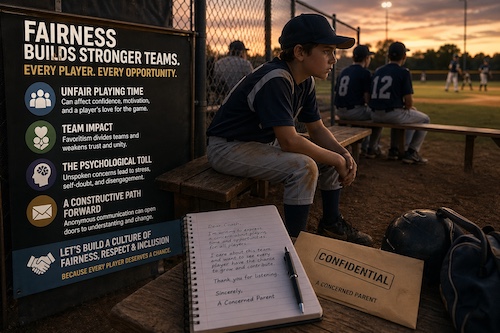
 This issue hits close to home for just about every parent and child involved in youth sports. Behind the cheers, practices, and team photos, there’s a quieter concern that too often goes unspoken—unfair playing time.
In situations like these, speaking up can feel difficult. Emotions run high, relationships matter, and no one wants to create tension. That’s where anonymity can serve a purpose. Writing an anonymous letter allows concerns to be expressed without direct confrontation. Done thoughtfully, it can preserve peace while still encouraging understanding and accountability within a team.
Unfair playing time is more than a coaching decision—it can shape a young athlete’s confidence and sense of belonging. Many student-athletes put in the effort, attend every practice, and remain committed, only to spend most of their time on the bench.
It’s like preparing for something meaningful but never being given the chance to participate. Over time, that disconnect can lead to frustration, self-doubt, and disengagement.
For parents, the experience can be just as difficult. They invest time, energy, and support into their child’s athletic journey—driving to practices, attending games, and helping them recover from setbacks.
Watching that same child consistently overlooked, despite their effort, can feel disheartening. It raises questions about fairness and whether all players are truly being given equal opportunities to grow.
When playing time appears uneven or biased, the effects ripple beyond individual players. Team dynamics begin to shift.
Some athletes may start to question their value, while others—receiving more time—may feel uncomfortable or undeserving. The sense of unity that teams rely on begins to weaken. Like a boat where not everyone is rowing together, progress slows and frustration builds.
This kind of imbalance can quietly divide a team, making it harder for players to trust one another and work toward a shared goal.
Perhaps the most overlooked impact is the internal one. Players often notice these patterns but hesitate to speak up. They may worry about consequences, fear being labeled as difficult, or simply not know how to raise the issue constructively.
These unspoken concerns can lead to stress, reduced performance, and a gradual loss of enthusiasm for the sport they once loved.
This is where anonymous communication can make a meaningful difference.
An anonymous letter offers a way to bring concerns forward without placing individuals in uncomfortable or confrontational situations. It allows parents or players to share observations respectfully, focusing on fairness and team well-being rather than blame.
When approached with professionalism and care, these letters can open the door to reflection. Coaches may not always be aware of how their decisions are perceived. A thoughtful message can prompt reassessment and, ultimately, positive change.
Youth sports are at their best when they promote growth, teamwork, and inclusion. Fair playing time doesn’t necessarily mean equal minutes in every situation, but it does mean transparency, consistency, and a genuine effort to develop every player.
When athletes feel valued—regardless of their role—the entire team benefits. Confidence grows, trust strengthens, and performance improves.
Anonymous letters, when used responsibly, can help initiate these important conversations. They signal that someone cares enough to speak up—not to criticize, but to improve the experience for everyone involved.
Sometimes, all it takes to spark change is a single, respectful message.
A concerned parent might simply highlight an observed imbalance in playing time and express a desire for greater fairness and opportunity for all players. Framed constructively, this kind of outreach can encourage reflection without creating conflict.
In the end, fairness in youth sports isn’t just about time on the field—it’s about the values we model for young athletes. When we choose to address concerns thoughtfully, we help create environments where every player has the chance to grow, contribute, and feel like they truly belong.