
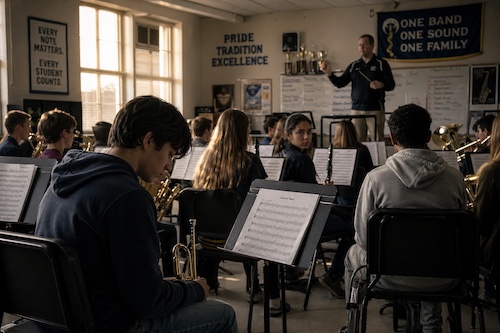
In every high school, there are spaces where students discover who they are—and who they might become. For many, the band room is one of those places. It should be a space filled with creativity, discipline, collaboration, and belonging. But when bias enters the equation, even the most harmonious environments can fall out of tune.
Recently, concerns have surfaced from within a school community regarding the direction of a high school band program. What began as quiet observations has grown into something more significant: a shared feeling that not all students are being given the same opportunity to succeed. At the center of this concern is a question that demands careful reflection—are all students truly being seen and supported for their abilities?
The issue came into focus through an anonymous letter submitted by a concerned family. Far from being a random complaint, the letter reflects a deliberate and thoughtful effort to raise awareness while avoiding unnecessary conflict. Choosing anonymity was not about hiding—it was about ensuring the message could be heard without fear of backlash.
And the message is clear: when student talent is overlooked or dismissed, the consequences reach far beyond a single missed opportunity. It can shape a student’s confidence, diminish their passion, and alter their path.
Bias in education is not a new conversation, but its presence in arts programs—particularly in areas like band—can be especially damaging. Unlike standardized subjects, music often relies on subjective evaluation. This makes fairness, transparency, and intentional inclusivity all the more critical.
When students are denied equal access to opportunities—whether it’s solos, leadership roles, or even recognition—the impact is lasting. Students begin to question their abilities. They disengage. In some cases, they walk away from something they once loved.
For students in programs like Special Education, the stakes can be even higher. Access to the arts is not just about performance—it’s about expression, confidence, and connection. Bias, whether conscious or not, can quietly close doors that should remain open to all.
What makes this moment different is that the concern does not stand alone. The anonymous letter appears to echo a broader sentiment within the community. When one voice speaks up, it often represents many more who have experienced similar frustrations but have not yet found a way to express them.
This is not about assigning blame—it’s about recognizing patterns and asking important questions. Are systems in place to ensure fairness? Are all students being evaluated with consistency? Are diverse talents being nurtured equally?
At the heart of the program is the band director—a figure with immense influence over student experience. With that role comes responsibility. The ability to shape not just performances, but people.
This moment presents an opportunity. By listening openly, reflecting honestly, and taking meaningful steps forward, leadership can rebuild trust and restore balance within the program. Addressing concerns does not weaken authority—it strengthens it.
The call from the community is not simply about music. It is about equity. It is about ensuring that every student—regardless of background, learning differences, or personal circumstances—has a fair chance to participate, grow, and succeed.
Creating an inclusive band program means more than filling seats. It means actively cultivating an environment where every student feels valued, heard, and capable of contributing. It means recognizing that talent comes in many forms—and that opportunity should as well.
Great music depends on balance. No single instrument carries the performance; it is the combination of many voices, working together, that creates something meaningful.
The same is true for a school community.
By acknowledging concerns, embracing transparency, and committing to fairness, this band program has the opportunity to become stronger than before. Not just technically—but ethically, culturally, and emotionally.
Because in the end, every student deserves more than a place in the ensemble.
They deserve a chance to be heard.