Cancel Culture Triggers: How to Avoid the Noise and Choose a Better Way Forward
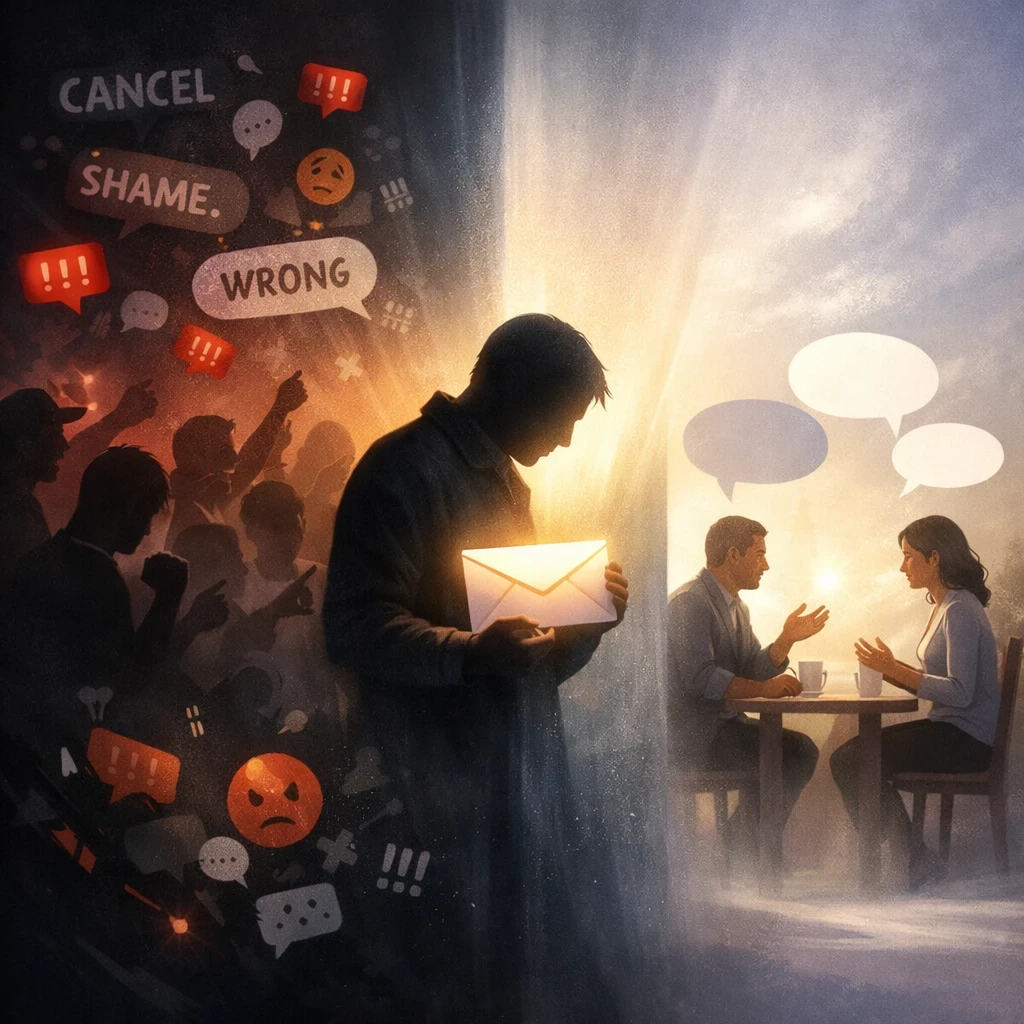
What If Cancel Culture Isn’t Accountability—But Avoidance?
We live in a time where a single moment, a single post, or a single mistake can define a person forever. In the age of instant reactions, cancel culture has become a powerful force—one that can expose wrongdoing, but also one that can silence, shame, and divide.
But here’s the real question:
Are we holding people accountable… or avoiding the harder work of understanding them?
This is where the conversation needs to shift.
The Ethical Tension: Free Speech vs. Accountability
At the heart of cancel culture lies a difficult balance: the right to speak freely vs. the need to hold people responsible.
Free speech allows us to express ideas, challenge norms, and speak truth to power. But it also comes with responsibility. Words can harm, mislead, and divide.
On the other hand, accountability is essential for growth and justice. It pushes individuals—especially those with influence—to acknowledge harm and do better.
But somewhere along the way, the line blurred.
What began as a tool for awareness has, at times, turned into public judgment without process.
And that’s where the problem begins.
When Accountability Becomes Punishment
Cancel culture often moves fast—too fast.
Instead of understanding context, we react. Instead of asking questions, we assume. Instead of growth, we demand consequences.
This creates a dangerous pattern:
- Reputations are damaged overnight
- Nuance is ignored
- People are reduced to their worst moments
And perhaps most concerning:
There is rarely room for redemption.
If the goal is progress, we have to ask ourselves—Is permanent punishment really the answer?
How to Avoid Cancel Culture Thinking
If you’re looking for real cancel culture solutions, it starts at the individual level. Avoiding the trap doesn’t mean ignoring harm—it means responding better.
Here’s how to do that:
1. Pause Before Reacting
Not every situation needs an immediate response. Take a step back. Gather facts. Ask: What am I missing?
2. Seek Understanding, Not Victory
Conversations shouldn’t be about “winning.”They should be about learning. Try to understand perspectives before forming conclusions.
3. Separate the Person from the Action
People are more than their mistakes. Hold actions accountable—but leave room for growth.
4. Value Dialogue Over Public Judgment
Private, respectful conversations often lead to more change than public callouts ever will.
5. Allow Space for Growth
Everyone evolves. If we deny that, we deny the possibility of progress itself.
Building Stronger Communities in a Reactive World
Avoiding cancel culture isn’t just an individual effort—it’s a community responsibility.
We need to create environments where:
- People feel safe to speak honestly
- Mistakes are addressed, not weaponized
- Conversations replace assumptions
- Growth is encouraged, not dismissed
Strong communities don’t thrive on fear. They thrive on trust, communication, and accountability with compassion.
A Smarter Alternative: Anonymous Written Letters
Sometimes, the biggest barrier to honest communication is fear.
Fear of backlash.Fear of being misunderstood.Fear of saying the wrong thing the wrong way.
That’s where a different approach can make all the difference.
Anonymous written letters offer a powerful, balanced solution.
They allow people to:
- Share honest thoughts without fear of public shaming
- Address sensitive issues calmly and constructively
- Offer feedback that is thoughtful—not reactive
- Open conversations that might not happen otherwise
Instead of escalating conflict, anonymous letters slow things down. They shift the focus from exposure to understanding.
For individuals, they provide a safe way to express difficult truths. For communities and organizations, they create space for real dialogue.
This isn’t about hiding. It’s about communicating with intention.
From Reaction to Reflection
Cancel culture thrives on speed. Growth requires pause.
If we want better outcomes, we need better conversations.
That means:
- Choosing empathy over assumption
- Dialogue over division
- Reflection over reaction
And sometimes, it means finding new ways to communicate—ones that prioritize clarity, respect, and honesty.
Final Thought
If you’ve ever hesitated to speak your mind…If you’ve ever held back out of fear of being misunderstood…If you’ve ever wanted to say something important—but didn’t know how—
There is another way.
At Anonymous Written Letters, your voice matters—without the noise. Our team helps you express what needs to be said with care, clarity, and complete privacy.
Your message doesn’t have to be loud to be powerful. Sometimes, the most meaningful change starts quietly.
If you’d like, I can next:
- Create a short social media version of this post
- Turn this into a high-converting landing page
- Or design headline variations for A/B testing
✉️ Anonymous Written Letters
Your message. Our mission.
👉 Start your anonymous letter today. Say what you’ve been holding back—safely, honestly, and without fear.